

A hardware wallet acts as a physical vault for cryptocurrency, storing private keys on a secure offline chip – making it virtually immune to hacks, malware, and exchange failures that regularly plague the crypto Wild West. Unlike internet-connected wallets, these devices sign transactions internally while keeping sensitive data isolated from online threats. Though less convenient for quick trades, hardware wallets remain essential for serious investors who value ironclad security over speed. The deeper story of crypto protection goes well beyond basic storage solutions.
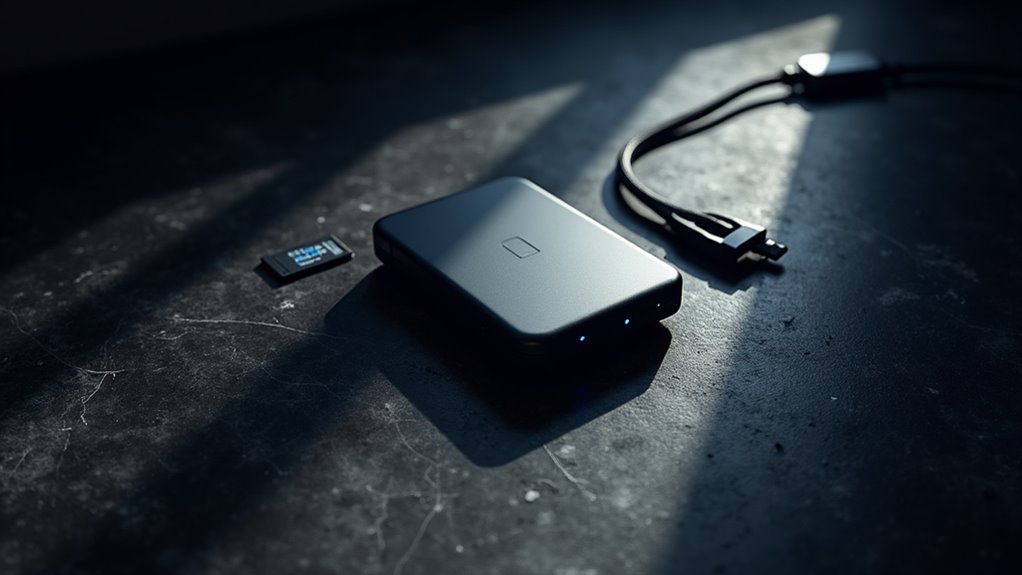
Let’s be real – the cryptocurrency landscape is basically the Wild West of finance, where exchange hacks and elaborate phishing schemes aren’t just possibilities, they’re practically daily occurrences.
Hardware wallets flip the script by generating and maintaining private keys in a secure chip that never connects to the internet. It’s like having a bank vault that somehow fits in your pocket, except this time, you’re actually in control of your money (imagine that). The durable design features ensure your crypto holdings remain protected even through physical wear and tear.
Keeping your crypto keys offline isn’t just smart – it’s like having an impenetrable vault that fits in your pocket.
These clever little devices work by signing transactions internally without ever exposing the private keys to the connected computer or smartphone. When you wanna move some crypto, the transaction gets signed within the device’s secure element – think of it as your personal bouncer, checking IDs before letting anyone touch your digital cash. The wallet provides trustless transactions without requiring any intermediaries to verify them. As a non-custodial solution, hardware wallets give users complete control over their cryptocurrency assets without relying on third parties. The public key can be safely shared to receive funds while keeping the private key secure and confidential.
Popular brands like Ledger and Trezor have turned this technology into an art form, offering various models that support multiple cryptocurrencies on a single device. Since private keys remain offline, these devices provide superior protection against online threats compared to internet-connected wallets.
The beauty of hardware wallets lies in their immunity to the typical digital nasties that plague online systems. Viruses? Malware? Exchange collapses? They might as well be throwing spitballs at a tank.
But here’s the kicker – this enhanced security comes with its own set of quirks. You’ll need to shell out some cash upfront (quality security ain’t free), and it’s definitely not as convenient as whipping out your phone for quick trades. Plus, there’s always the ironic possibility of physically losing your digital asset protector.
Setting up these devices requires a bit more effort than your average mobile wallet. You’ll need to purchase from legitimate sources (no sketchy eBay deals, please), create strong PINs, and safely store backup seed phrases – preferably not on a Post-it note stuck to your monitor.
Regular firmware updates are essential, cause even Fort Knox needs maintenance.
The bottom line? In a world where digital assets are increasingly becoming targets for sophisticated attacks, hardware wallets aren’t just nice-to-haves – they’re essential tools for anyone serious about protecting their crypto investments.
Sure, they’re not perfect, but they’re currently the best defense we’ve got against the dark arts of cryptocurrency theft.
Frequently Asked Questions
Can I Recover My Crypto if I Lose My Hardware Wallet?
Yes, crypto assets can be recovered if a hardware wallet is lost. The key lies in the seed phrase – those 12-24 sacred words generated during setup.
As long as someone’s kept their seed phrase safe (and offline!), they can restore their wallet on a new device.
Smart users immediately transfer funds to a fresh wallet with a different seed phrase after recovery. It’s not the device that matters – it’s those magic recovery words.
How Much Do Hardware Wallets Typically Cost?
Hardware wallets typically cost between $50-250, depending on features and brand prestige. Entry-level models like the SafePal S1 start around $50, while premium devices can reach $250. Most popular options hover around $120.
But don’t forget those sneaky extra costs – shipping fees ($5-20), import duties, and optional accessories can add another $20-60 to the total.
The market’s flooded with options, but you’re basically paying for security features and brand reliability.
Are Hardware Wallets Compatible With All Cryptocurrencies?
Hardware wallets don’t support every cryptocurrency out there.
While major brands like Ledger and Trezor are compatible with 1000+ coins, including Bitcoin and Ethereum, many lesser-known altcoins remain unsupported.
Support varies by manufacturer and depends on factors like device storage capacity and blockchain complexity.
NFTs and newer networks often face limited compatibility, and some cryptos require additional software alongside the hardware wallet for full functionality.
Can Hardware Wallets Be Hacked Through Internet Connections?
Hardware wallets are remarkably resistant to internet-based attacks since their private keys never leave the secure element.
However, they’re not entirely invulnerable. While the core security remains intact during online connections, potential vulnerabilities exist through compromised firmware updates, malicious bridge software, or social engineering attacks.
The key advantage is that transactions are signed offline, with only the verified signature transmitted online, creating a robust security barrier against remote hacking attempts.
How Often Should I Update My Hardware Wallet’s Firmware?
Hardware wallets should be updated every 3-6 months for major firmware releases, though critical security patches might drop more frequently.
Smart users check manufacturer websites monthly for updates – why risk it? The stakes are too high to ignore patches that fix vulnerabilities.
While some wallets push automatic notifications, it’s foolish to rely solely on these.
Remember: an outdated wallet is basically a welcome mat for hackers.


