Setting up a Bitcoin wallet requires careful consideration of security versus convenience. Hardware wallets offer maximum protection by storing private keys offline, while software wallets provide easier access but increased vulnerability. Users must verify wallet authenticity, enable two-factor authentication, and securely back up recovery phrases on paper – never digitally. Daily monitoring and transaction verification are essential. Regular updates and vigilance against phishing complete the security foundation. The path to truly securing crypto assets involves several critical steps beyond basic setup.
As cryptocurrency continues to reshape the financial landscape, obtaining a secure Bitcoin wallet has become an essential first step for anyone looking to enter the digital currency domain. While exchanges and financial institutions rush to capitalize on the crypto boom, the sobering reality remains: choosing the wrong wallet can lead to catastrophic losses in this largely unregulated space.
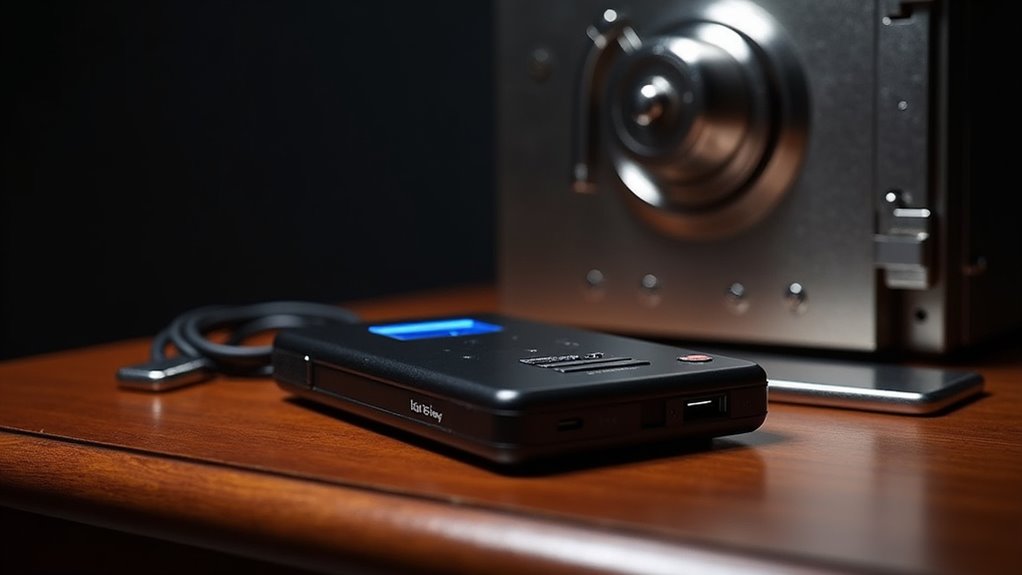
The market offers several wallet types, each with its own set of trade-offs. Software wallets provide convenience through mobile, desktop, and web-based applications, but they’re only as secure as the devices they run on. Hardware wallets, those small yet mighty fortresses of digital assets, offer superior security by keeping private keys offline – though they’ll cost you more than their software counterparts. For enhanced security features, some investors choose platforms like Exodus that offer Trezor integration support. Many users opt for hardware wallets since they provide offline key storage that protects against digital threats. Custodial wallets offer simplified management through trusted exchanges, though this comes at the cost of reduced control over your assets.
Hardware wallets may cost more, but they serve as impenetrable digital vaults compared to convenient yet vulnerable software alternatives.
Paper wallets, while seemingly antiquated, still serve as a viable option for those who trust analog solutions over digital ones. Unlike traditional physical wallets, these crypto wallets store private key access rather than actual currency. Hardware wallets include PIN protection for an additional layer of security against unauthorized access.
Setting up a wallet demands meticulous attention to detail and a healthy dose of paranoia. When downloading software wallets, users must verify authenticity through official channels – not the countless imposter apps lurking in app stores. Hardware wallets require purchase from authorized retailers only, as third-party sellers might tamper with devices.
The installation process involves generating a recovery phrase – a string of words that can resurrect a wallet if lost or damaged.
Security measures aren’t optional in the crypto sphere – they’re survival tools. Strong passwords are just the beginning. Two-factor authentication, regular software updates, and cold storage for substantial holdings form the bare minimum of a robust security strategy.
The crypto landscape is riddled with sophisticated phishing attempts and social engineering attacks, making vigilance non-negotiable.
Backup procedures deserve equal scrutiny. Writing down recovery phrases on paper might seem primitive, but it’s far more resilient than digital storage. Smart users distribute these backups across multiple secure locations, often utilizing fireproof safes and encrypted digital copies as redundancy measures.
Daily wallet operations require unwavering attention. Every transaction should undergo double verification of recipient addresses and amounts. Transaction fees need careful consideration to avoid costly delays or overpayment. Regular monitoring of wallet activity helps detect unauthorized access attempts early.
The golden rule remains absolute: private keys and recovery phrases stay confidential, no exceptions.
In this wild west of digital finance, a well-secured Bitcoin wallet isn’t just a tool – it’s a fortress protecting assets from an ever-growing array of threats. Choose wisely, secure thoroughly, and maintain religiously.
Frequently Asked Questions
Can I Recover My Bitcoin if I Lose My Wallet Password?
Bitcoin wallet recovery depends entirely on having the seed phrase – those essential recovery words that act as the master key.
Without them, no password reset button exists.
While recovery tools like Hashcat might help with partial passwords, full access remains impossible without proper backup credentials.
Professional recovery services exist but offer no guarantees.
The harsh reality: cryptocurrencies prioritize security over convenience, making careless storage potentially catastrophic.
What Happens to My Bitcoin Wallet if My Computer Crashes?
A computer crash doesn’t affect Bitcoin holdings since they exist on the blockchain, not locally.
However, access methods vary in vulnerability. Hardware wallets remain secure, while desktop wallet files could be lost without proper backups.
Recovery phrases serve as the ultimate failsafe – as long as they’re stored safely offline.
Web wallets, being cloud-based, continue functioning regardless of local computer issues.
Are Bitcoin Wallets Insured Against Theft or Hacking?
Most Bitcoin wallets lack traditional insurance protection.
While major exchanges like Coinbase offer limited coverage against cybersecurity breaches, self-custody wallets are generally uninsured.
Hot wallets on exchanges may have partial protection, but cold storage typically offers more robust coverage.
Emerging specialized crypto insurance products exist but come with high premiums and strict limitations.
Bottom line: unlike bank accounts, most Bitcoin wallets aren’t backed by FDIC or extensive insurance policies.
Can I Have Multiple Bitcoin Wallets Under One Identity?
Yes, users can maintain multiple Bitcoin wallets under a single identity – it’s not just possible, but often recommended for security and organization.
Each wallet functions independently, allowing separation of funds for different purposes like trading, savings, or business transactions.
While this approach offers enhanced privacy and risk management, it requires careful organization of private keys and recovery phrases.
Many crypto enthusiasts use various wallet types simultaneously for ideal asset protection.
How Often Should I Update My Bitcoin Wallet Software?
Bitcoin wallet updates should occur every 1-3 months, though critical security patches may require immediate attention.
While some wallets automate this process, others demand manual vigilance. Smart users enable automatic updates when available and manually check monthly.
Each update addresses vulnerabilities, enhances features, and maintains network compatibility.
Skipping updates isn’t just lazy – it’s dangerous. A compromised wallet means compromised funds, period.