Dogecoin, originally created as a joke cryptocurrency in 2013, operates on blockchain technology using a Proof-of-Work system similar to Bitcoin but with faster transactions and lower fees. Unlike Bitcoin’s limited supply, Dogecoin mints 5 billion new coins annually through mining, where computers solve complex puzzles to validate transactions. Despite its meme origins, it’s evolved into a legitimate digital currency worth billions, processing real-world transactions and attracting major corporate attention. The rabbit hole of Dogecoin’s transformation goes surprisingly deep.
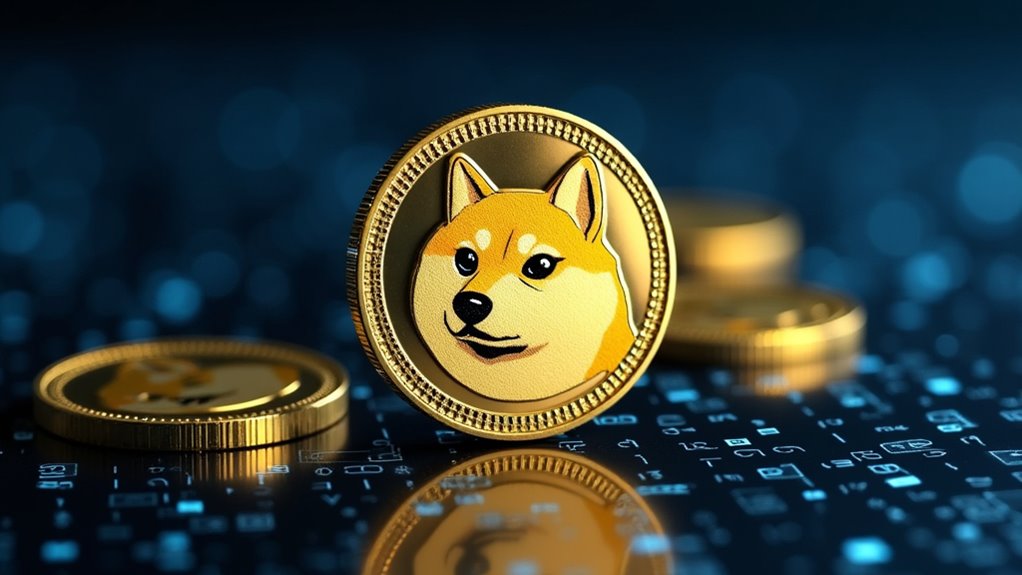
What began as a joke cryptocurrency based on a meme has evolved into a multi-billion dollar digital asset that refuses to be dismissed. Created in December 2013 by Billy Markus and Jackson Palmer, Dogecoin emerged as a fork of Luckycoin, itself derived from Litecoin, which branched from Bitcoin. The creators, perhaps unwittingly, triggered a phenomenon that would challenge traditional notions of value and currency.
Behind the playful Shiba Inu facade lies serious technological infrastructure. Dogecoin operates as an open-source, peer-to-peer cryptocurrency utilizing blockchain technology and a Proof-of-Work consensus mechanism. Its Scrypt mining algorithm proves less demanding than Bitcoin’s SHA-256, while its one-minute block time delivers faster transactions than its more famous predecessor. The innovative Scrypt algorithm design enhances mining decentralization by making the process less predictable. The emphasis on low transaction costs makes it particularly appealing for everyday use.
The mining process reveals Dogecoin’s deliberate departure from crypto orthodoxy. Miners receive 10,000 DOGE for each block they validate, but here’s the kicker: unlike Bitcoin’s artificial scarcity, Dogecoin has no maximum supply cap. With 5 billion new coins minted annually and over 132 billion already in circulation, it’s a direct challenge to the scarcity-equals-value narrative dominating cryptocurrency discourse. Like many viral marketing driven cryptocurrencies, its value relies heavily on community sentiment and social media trends.
This abundance hasn’t hindered Dogecoin’s practical applications. The network processes transactions with remarkable speed and minimal fees, making it ideal for online tipping, donations, and microtransactions. Some merchants accept DOGE for goods and services, though its primary utility remains within the crypto ecosystem. Following in Dogecoin’s footsteps, other meme coins like Shiba Inu and Pepe Coin have emerged to capitalize on community-driven momentum. For beginners looking to invest, choosing a reliable exchange is crucial before acquiring any Dogecoin.
The “Doge Army” – Dogecoin’s passionate community – has transformed what could have been a short-lived joke into a cultural phenomenon. Their impact extends beyond memes and social media buzz, with the community organizing legitimate charitable initiatives and fundraising campaigns. High-profile supporters like Elon Musk have only amplified its visibility, though this attention comes with a price: extreme market volatility.
That volatility became starkly apparent when Dogecoin’s market capitalization hit $85 billion in May 2021, a figure that would make traditional economists choke on their morning coffee. Yet Dogecoin consistently ranks among the top 15 cryptocurrencies by market cap, proving that perhaps the joke is on those who dismissed it.
While critics argue it’s purely speculative, Dogecoin’s persistence raises uncomfortable questions about the nature of value in the digital age. After all, what’s more absurd: a dog-themed cryptocurrency or a global financial system built on faith in fiat currency?
Frequently Asked Questions
Can I Mine Dogecoin Using My Smartphone?
While technically possible through apps like Minergate and Dogeminer, smartphone mining for Dogecoin is largely futile.
The device’s limited processing power and high energy consumption make it economically impractical, yielding negligible returns.
Cloud mining services offer a more viable alternative, allowing users to rent computing power remotely.
However, even these services provide minimal profits.
Serious miners should consider dedicated mining rigs instead of relying on smartphones.
What Happens to Lost or Forgotten Dogecoin Wallet Passwords?
Lost Dogecoin wallet passwords create a digital black hole – funds remain permanently locked if recovery options fail.
While the wallet.dat file remains encrypted and secure, owners face limited options: using backup seed phrases, attempting password variations, or seeking professional recovery services.
Notably, millions in Dogecoin remain frozen this way, creating an unintentional deflationary effect.
The silver lining? These expensive lessons have pushed crypto users toward better security practices.
Does Elon Musk Own Dogecoin?
Elon Musk has publicly confirmed owning Dogecoin but remains cagey about the exact amount.
While he’s dubbed himself the “Dogefather” and frequently tweets about DOGE, causing price swings, his actual holdings remain a mystery.
Speculation links him to wallets containing billions of DOGE, but no concrete evidence exists.
His companies, particularly Tesla and SpaceX, have embraced Dogecoin for merchandise purchases, further fueling speculation about his personal stake.
Which Countries Have Banned or Restricted Dogecoin Trading?
Several major economies have cracked down on Dogecoin along with other cryptocurrencies.
China, Turkey, Bangladesh, Algeria, and Egypt have implemented complete bans on crypto transactions, including Dogecoin.
Meanwhile, India, Russia, Indonesia, and Vietnam maintain partial restrictions – typically allowing trading but prohibiting use as payment.
Other nations like South Korea, the US, and UK are exploring regulatory frameworks, driven by concerns over financial stability, money laundering, and consumer protection.
Can Dogecoin Transactions Be Traced Back to Their Original Sender?
Dogecoin transactions are traceable through the public blockchain, but catching the actual sender isn’t straightforward.
While every transaction leaves a digital footprint, savvy users employ privacy tools like mixing services and anonymous wallets to cover their tracks.
Law enforcement can pierce this veil by subpoenaing exchange data and using sophisticated blockchain analysis tools, but it’s a cat-and-mouse game where complete anonymity remains possible through various technical workarounds.