

Meme coins are cryptocurrency tokens born from internet culture and viral jokes, with values driven more by social media hype than actual utility. While traditional cryptocurrencies like Bitcoin rely on technological innovation, meme coins like Dogecoin and Shiba Inu thrive on community enthusiasm, celebrity endorsements, and speculative trading. Their low entry costs and potential for astronomical returns attract risk-tolerant investors, though this casino-like environment masks deeper questions about the democratization of finance versus gambling psychology. The rabbit hole of meme coins reveals surprising truths about modern investment culture.
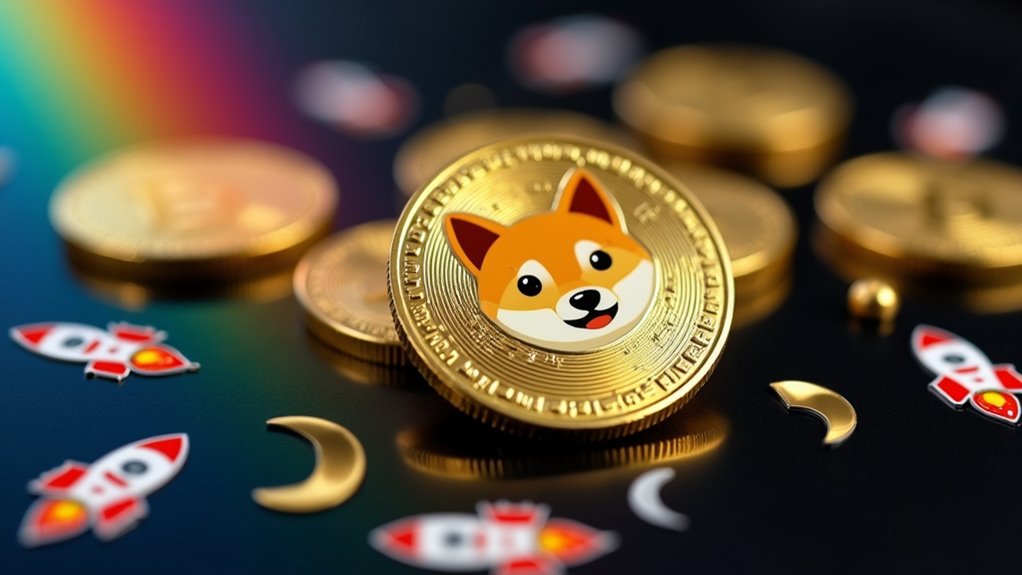
While traditional financial markets operate on fundamentals and technical analysis, meme coins have surged to prominence through a peculiar cocktail of viral culture, celebrity worship, and collective FOMO. These digital tokens, born from internet memes and social media trends, have transformed cryptocurrency from a serious financial instrument into something that more closely resembles a digital entertainment phenomenon.
The allure of meme coins lies in their accessibility and the intoxicating promise of overnight riches. With tokens often priced at fractions of a penny, investors can acquire millions of coins for a modest investment, feeding into the “what if” mentality that drove Dogecoin‘s meteoric 12,000% rise in 2021 and Shiba Inu’s mind-bending 40,000,000% climb from inception to peak. The emergence of Dogecoin in December 2013 marked the beginning of the meme coin revolution. It’s a casino mentality wrapped in dog memes and rocket emojis. The lower barrier to entry makes these tokens particularly attractive to newcomers in the cryptocurrency space.
Meme coins seduce with penny prices and dreams of wealth, turning modest investments into potential millions through pure speculative psychology.
The power of celebrity endorsements has turned meme coins into a bizarre puppet show, where a single tweet from Elon Musk can send markets into a frenzy. While Mark Cuban accepts Dogecoin for basketball merchandise and Snoop Dogg plays crypto influencer, the real puppet masters remain hidden behind screens, orchestrating pump-and-dump schemes that would make Wall Street blush. Unlike Bitcoin, Dogecoin operates with no supply limit, making it more accessible to everyday investors.
These digital tokens thrive on the backbone of passionate online communities, where shared jokes and cultural references create a sense of belonging that transcends traditional investment rationale. Notable examples like Pepe Coin have achieved rapid growth purely through community enthusiasm. It’s a world where technical analysis takes a backseat to Reddit threads and Discord channels, and where FOMO-driven investors chase the next “moon shot” with religious fervor.
Despite their seemingly frivolous nature, some meme coins have evolved beyond their joke origins. Dogecoin’s merged mining with Litecoin and Shiba Inu’s expansion into decentralized exchanges demonstrate an attempt to legitimize through technological innovation. Yet the underlying volatility and manipulation potential remain, creating a playground for risk-tolerant traders who view the 24/7 crypto markets as their personal casino.
The meme coin phenomenon represents a perfect storm of social media influence, easy access to trading platforms, and the democratization of investment. It’s a mirror reflecting our times – where internet culture collides with finance, where millennials and Gen Z investors reject traditional investment wisdom, and where the line between gambling and investing grows increasingly blurry.
Whether this represents a revolutionary democratization of finance or a dangerous speculative bubble remains to be seen, but one thing is certain: meme coins have forever changed how we think about money in the digital age.
Frequently Asked Questions
How Risky Is Investing in Meme Coins Compared to Traditional Cryptocurrencies?
Meme coins represent a markedly higher risk compared to traditional cryptocurrencies.
With volatility rates 50 times higher than Bitcoin, these digital assets frequently experience wild price swings driven by social media hype rather than fundamentals.
While traditional cryptos aren’t risk-free, meme coins face additional hazards: 80% are scams, they lack utility, and operate in murky regulatory waters.
Their potential for 1000%+ gains comes with an equally likely chance of total loss.
Can Meme Coins Be Used for Real-World Transactions and Purchases?
While meme coins can technically be used for purchases, their real-world utility remains severely limited.
Only a handful of merchants accept popular tokens like Dogecoin, primarily through select online platforms and crypto ATMs.
High volatility, slow transaction speeds, and steep fees make them impractical for everyday use.
Most establishments avoid meme coins due to regulatory uncertainty and conversion risks, relegating them primarily to speculative trading rather than practical transactions.
What Happens to Meme Coins When Their Viral Popularity Fades?
When viral hype fades, most meme coins face a harsh reality: plummeting trading volumes, vanishing market caps, and mass investor exodus.
Data shows 50-80% drops in activity across major platforms. The few survivors like Dogecoin maintain some relevance, while thousands of others become worthless.
Some projects desperately pivot toward utility, but most fade into crypto obscurity.
It’s a sobering reminder that popularity without purpose rarely sustains value.
How Do You Identify Potentially Successful Meme Coins Before They Surge?
Successful meme coin identification requires analyzing multiple critical factors.
Strong community engagement across social platforms and genuine viral potential serve as primary indicators.
Scrutinize the development team’s transparency, examine tokenomics for fair distribution, and verify locked liquidity.
Market timing matters – look for launches during bullish cycles.
However, even with perfect metrics, meme coins remain highly speculative investments with significant risks of failure.
Are Meme Coins Regulated Differently Than Mainstream Cryptocurrencies?
Meme coins operate in a significant regulatory gray area compared to mainstream cryptocurrencies.
While major cryptos face intense SEC scrutiny as potential securities, meme coins largely evade this oversight, being viewed more as collectibles. They sidestep many registration requirements and AML/KYC rules that govern traditional cryptocurrencies.
This regulatory vacuum has enabled their rapid proliferation, though increasing calls for oversight suggest this freedom may not last indefinitely.


