Leading cryptocurrency exchanges like Coinbase and Binance offer secure trading environments backed by rigorous security protocols and regulatory compliance. Traders must prioritize platforms with strong track records, substantial liquidity, and extensive educational resources. Essential safety measures include two-factor authentication, KYC verification, and meticulous transaction recording. Smart traders leverage demo accounts to master interfaces before risking real capital. The crypto landscape rewards those who combine cautious security practices with strategic market analysis.
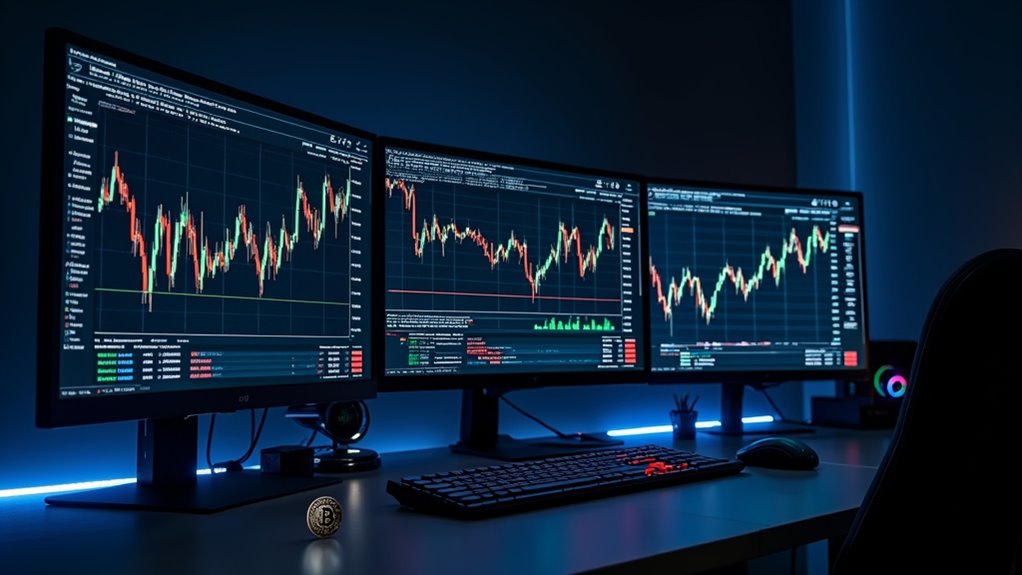
While cryptocurrency trading promises lucrative opportunities, managing the volatile digital asset landscape demands methodical preparation and unwavering discipline. The first vital step involves selecting a reputable cryptocurrency exchange – a decision that separates successful traders from those left nursing wounds from sketchy platforms. Smart traders scrutinize exchange fees, security protocols, and regulatory compliance while verifying the platform’s liquidity and available trading pairs. Bitcoin and Ethereum remain the most popular trading pairs for beginners due to their established market presence and relative stability. Platforms like Coinbase provide educational resources to help newcomers understand trading fundamentals.
Let’s cut through the hype: a fortress-like approach to account security isn’t paranoid – it’s essential. Two-factor authentication, robust passwords, and completed KYC verification form the bare minimum. The real pros take it further, implementing withdrawal whitelists and enabling thorough notification systems. Those who skimp on security might as well hand their digital assets to hackers on a silver platter. The blockchain ledger ensures every transaction remains permanently visible and traceable across the network.
Funding accounts requires surgical precision. Whether choosing fiat or crypto deposits, traders must verify transaction limits and processing times. One wrong digit in a wallet address, and those funds vanish into the digital void. Smart traders maintain meticulous records – not just for their peace of mind, but because tax authorities aren’t known for their forgiving nature when it comes to crypto gains. Decentralized exchanges offer direct peer-to-peer trading for those seeking greater control over their funds.
Send crypto to the wrong address, and your money disappears forever. The blockchain shows no mercy for careless mistakes.
The trading interface isn’t just pretty charts and flashy numbers – it’s a battlefield where fortunes are won or lost. Understanding order types, deciphering candlestick patterns, and mastering the order book separate the professionals from the amateurs. Those who jump in without practicing on demo accounts might as well be gambling their rent money. Many successful traders employ position trading strategies for long-term market exposure.
Risk management isn’t just another buzzword – it’s survival. The crypto market shows no mercy to emotional traders chasing FOMO or “betting the farm” on the next moon shot. Successful traders implement stop-loss orders religiously, diversify their holdings, and take profits systematically. They’re playing chess while others play Russian roulette.
Market analysis requires cutting through the noise. While crypto Twitter screams about the next 100x gem, serious traders follow reputable analysts, participate in legitimate communities, and utilize both technical and fundamental analysis. They understand that social media influence often masks manipulation.
Record-keeping separates the organized from the chaotic. Professional traders track every transaction, fee, and realized gain or loss with religious dedication. They leverage portfolio tracking tools and maintain thorough documentation – because when tax season arrives, “I forgot” doesn’t fly with auditors.
In this wild west of digital assets, only the prepared survive and thrive.
Frequently Asked Questions
How Do I Report Cryptocurrency Trading Gains and Losses for Tax Purposes?
Cryptocurrency traders must report all gains and losses on Form 8949 and Schedule D of their tax returns.
Each transaction requires listing the acquisition date, sale date, proceeds, cost basis, and resulting gain/loss.
Trades follow FIFO, LIFO, or specific identification accounting methods.
Short-term gains (<1 year) and long-term gains (>1 year) are reported separately.
Mining income requires Schedule C reporting if it’s a business venture.
What Security Measures Should I Take to Protect My Cryptocurrency Trading Account?
Protecting cryptocurrency trading accounts requires multiple security layers.
Strong two-factor authentication using authenticator apps, not SMS, forms the first defense. Hardware security keys offer elite protection.
Smart traders encrypt devices, use VPNs, and avoid public Wi-Fi. Whitelisting withdrawal addresses and enabling email alerts for account activity catch suspicious behavior.
Cold storage wallets shield long-term holdings, while regular security audits maintain account integrity.
Can I Trade Cryptocurrency Using My Retirement Account or Pension Funds?
Yes, but it’s complicated. Self-directed IRAs through specialized providers like BitcoinIRA allow crypto investments, though with higher fees and custodial risks.
Most 401(k)s don’t offer direct crypto options, but some providers permit small allocations up to 5%.
Traditional pension funds largely avoid direct crypto investments, preferring indirect exposure through stocks or funds.
The January 2024 approval of spot Bitcoin ETFs has expanded retirement account access, though regulatory oversight remains intense.
How Do Cryptocurrency Trading Bots Work and Are They Worth Using?
Crypto trading bots execute automated trades using preset algorithms and API connections to exchanges.
While they can eliminate emotional decisions and trade 24/7, they’re not a magical solution. These bots require significant technical knowledge, careful monitoring, and can be expensive.
They’re vulnerable to malfunctions and hacks if not properly secured. Success depends on thorough testing, understanding market conditions, and starting with small amounts to minimize potential losses.
What Happens to My Trades During a Cryptocurrency Exchange Outage?
During exchange outages, open orders remain frozen in queue but may not execute as intended.
Stop losses and take profits become ineffective, leaving positions vulnerable. While funds typically remain safe, traders lose access to withdrawals and position management.
When trading resumes, expect price volatility and potential slippage as delayed orders execute.
Documentation of attempted transactions during outages is essential, as some exchanges offer compensation for significant disruptions.